Every holiday season, thousands of first- and second-generation adult children buy Storyworth for their parents with the best intentions. The promise sounds wonderful: once a week, your parent receives an email with a prompt like “What was your childhood bedroom like?”, and at the end of the year, their replies are bound into a keepsake book.
For families where parents love sitting at a desktop keyboard and writing essays in English, it is a thoughtful product. But if your parents immigrated to the United States, Canada, Australia, or the UK and feel most at home speaking a heritage language—whether Mandarin, Cantonese, Spanish, Korean, Tagalog, or Vietnamese—the Storyworth experience almost always stalls out by week three.
Here is why weekly written prompts break down for immigrant families, and how a live two-way conversation in their native language changes everything.
1. Why Weekly Email Essays Feel Like Homework
When you hand an elder who speaks English as a second language a blank text box, you aren’t offering them a warm conversation—you are assigning them weekly homework.
- Keyboard and input friction: Typing memories on a computer or smartphone screen in a second language is exhausting. Even typing in their native script—whether pinyin, stroke input, hangul, or accented characters—on small mobile keypads is notoriously frustrating for aging eyes and fingers.
- The blank-page freeze: When faced with a broad written question like “Tell me about your first job,” modest elders often draw a blank or type two polite sentences: “I worked at a restaurant in 1982. It was hard work.”
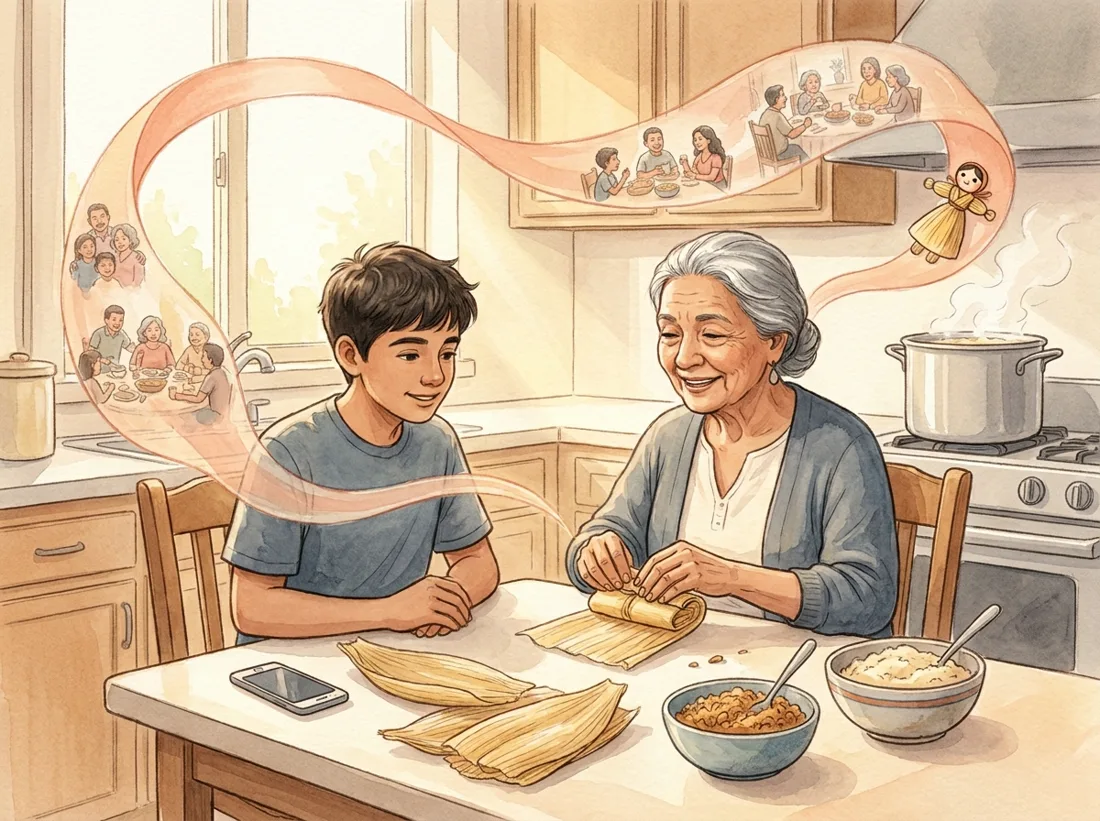
- No active listener in the room: Oral history has always been social. When elders tell stories over tea or across the dinner table, they feed off the listener’s curiosity, nodding, and spontaneous follow-up questions. A static email prompt—or a one-way phone voicemail recording—has no one talking back.
Before long, the weekly reminder emails pile up unread in their inbox, creating quiet guilt for both the parent and the child who bought the gift.
2. The Language Barrier: Losing Nuance, Kinship, and Voice
Even when an immigrant parent tries to write or translate their replies into English, three irreplaceable parts of your family’s heritage are lost:
- Idioms, humor, and cultural proverbs (chengyu, dichos, sokdam): The wit, understatement, and family sayings that define your parent’s personality rarely survive when forced through a second language.
- Extended kinship titles and hometown names: Elders naturally tell stories using multilingual kinship titles (“Second Paternal Uncle,” “Third Maternal Aunt”) and village names that English-only prompt tools cannot connect to a family tree.
- The sound of their real voice: Decades from now, what your children and grandchildren will long to experience isn’t just a summary of where Grandma worked—it is the cadence, warmth, and laughter of her actual voice.
3. How Heardloom Approaches Bilingual Family Oral History
Heardloom was built from the ground up to bridge the generational language gap. Instead of typing essays into an email, your parent or grandparent simply has a warm conversation.
A Patient Two-Way Interviewer (Lana) in Their Language
Your parents talk directly with Lana, a patient, unhurried AI interviewer fluent in Mandarin, Cantonese, Spanish, Korean, Tagalog, Vietnamese, and English. Lana doesn’t just read a prompt—she listens, responds naturally, asks thoughtful follow-up questions in real time, and brings in questions submitted by your children and grandchildren by name.
Zero App Needed: Scheduled Landline & Mobile Phone Calls
If your parent doesn’t want to learn a new app, Heardloom can ring their regular home landline or mobile phone once a week at their favorite hour. They pick up the receiver, chat with Lana in their native language for 10 to 15 minutes, and hang up. Or, when the family gathers on Sunday, you can place a phone on the dinner table while everyone talks together.
Backstage Family Tree & Cross-Session Memory
Lana is briefed on your family tree before every conversation. If your father mentioned his childhood neighbor Mr. Chen or his first motorcycle two weeks ago, Lana remembers those details next time and weaves unfinished threads back into the conversation.
Side-by-Side Bilingual Stories Synced to Audio & Video
Minutes after a conversation ends, Heardloom produces a bilingual chapter preserving their exact original words alongside a faithful English translation. Every sentence is verified in code against the recording and linked to the exact timestamp—so grandchildren can read comfortably in English and tap any paragraph to hear or watch that moment.
Storyworth vs. Heardloom at a Glance
| Feature | Storyworth | Heardloom |
|---|---|---|
| How Stories Are Collected | Written email replies (or scheduled phone recordings on Color & Unlimited plans) | Live 2-way voice or video conversation with Lana (app, browser, landline call, or dinner table) |
| Languages Supported | English and Spanish | Mandarin, Cantonese, Spanish, Korean, Tagalog, Vietnamese, and English |
| Bilingual Translation | ❌ Single language only (no side-by-side translation) | ✅ Side-by-side original native script + faithful English translation |
| Interviewer Style | Static weekly prompt | 2-way AI interviewer (Lana) that asks natural follow-ups in real time |
| Remembers Past Chats | ❌ Prompt-by-prompt silos | ✅ Remembers relatives, kinship titles, hometowns & unfinished threads |
| Elder Device Needed | Computer / smartphone email, or phone call | Any phone (landline or cell), web browser, or iOS/Android app |
| Audio & Video Verification | Typed text or unverified phone transcript | Every paragraph verified and linked to the exact second of voice or video |
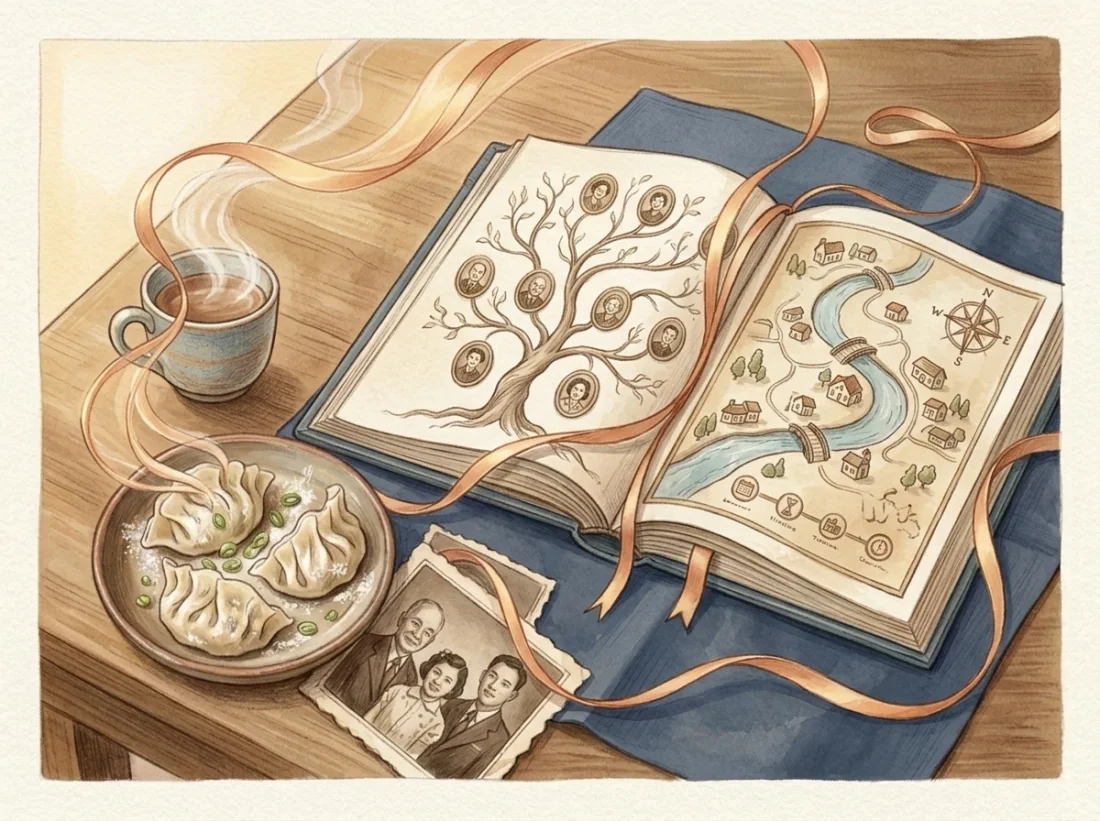
| Family Book & Archive | Chronological prompt book at year end | 12-part life-stage book + auto-woven Family Tree, Timeline, Hometown Map & Recipes |
| Family Pricing | $99/yr for 1 storyteller ($199/yr Unlimited) | First recording free · $99/yr covers the entire family |
(Want to see how video-monologue tools compare as well? Read our full Storyworth vs. Remento vs. Heardloom comparison or our Heardloom vs. Remento deep dive.)
5 Questions That Get Immigrant Parents Talking Today
If you want to start a conversation with your parents this weekend, skip broad biography prompts and ask specific, sensory questions about everyday moments (or explore our full interactive bilingual question bank):
- What was the very first dish you cooked for yourself after leaving your hometown?
- When you first arrived in a new country, what was the first food or object at the grocery store that looked completely unfamiliar to you?
- What was the sound outside your bedroom window early in the morning when you were ten years old?
- What was the first thing you bought with your very first paycheck, and who did you share it with?
- Is there a proverb or saying your own mother or grandmother always repeated whenever times were hard?
Give Them a Listener, Not Homework
Our parents and grandparents spent decades building a life in a new country while holding memories of a world we barely know. They shouldn’t have to spend their retirement typing essays at a keyboard to leave a legacy for their grandchildren.
When you give them a curious, patient listener who speaks their language, their memories flow as naturally as tea poured at the kitchen table. Listen to a sample bilingual story on our demo page or learn how to introduce Heardloom to your parents.