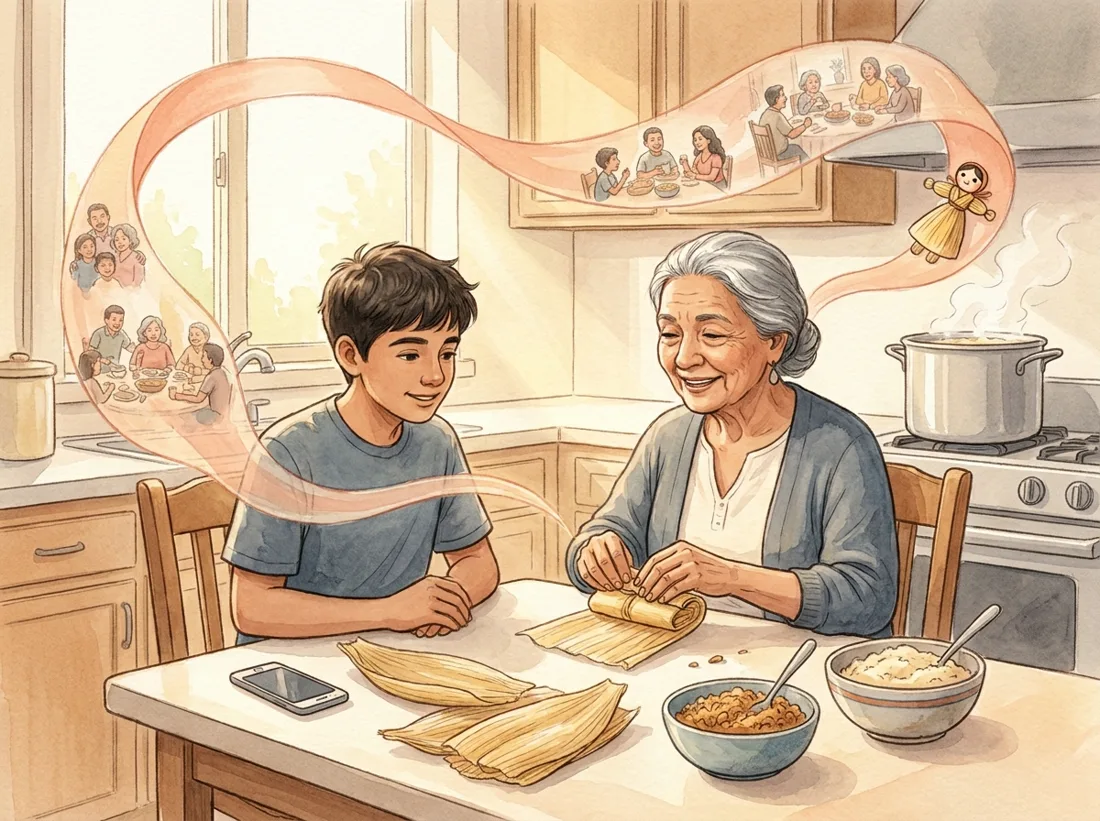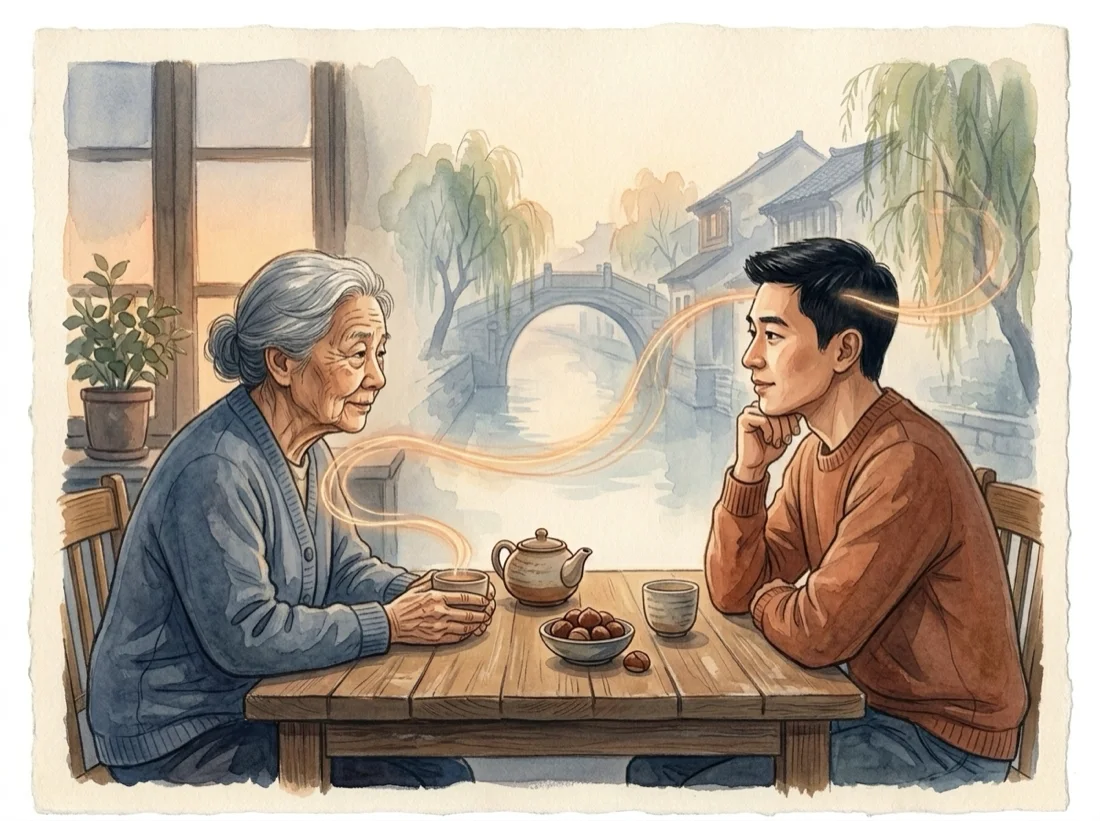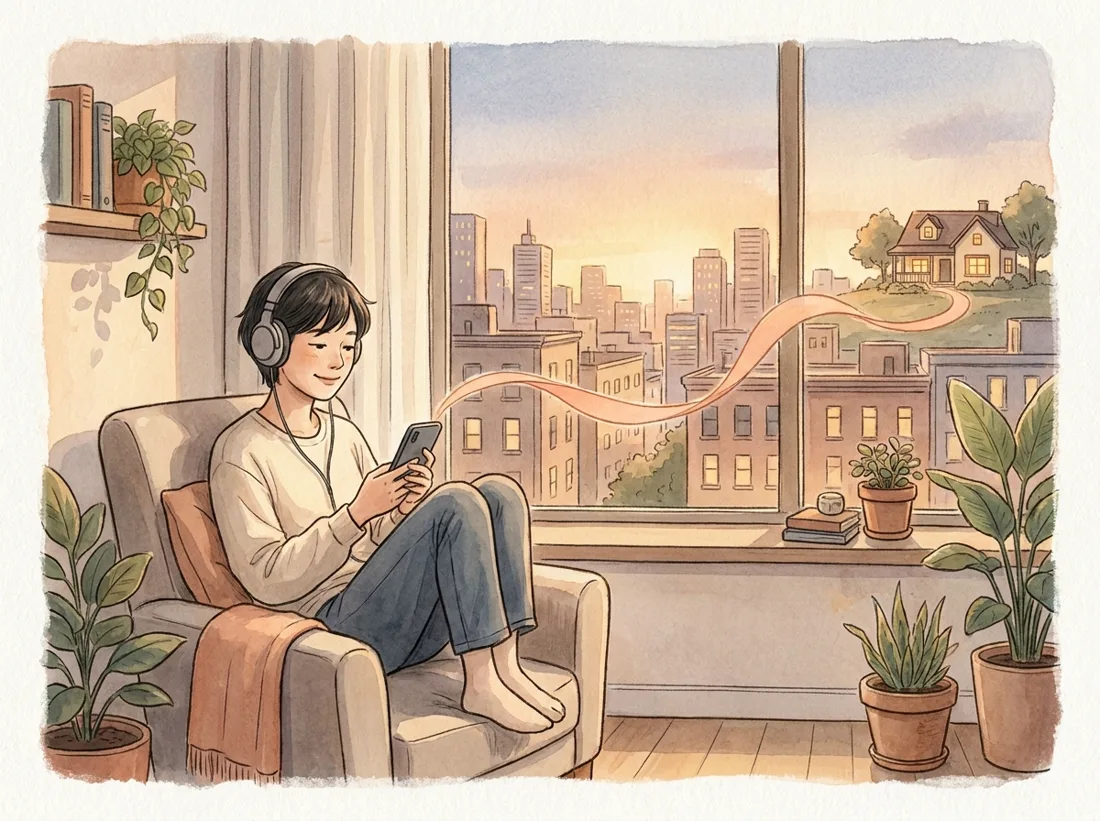
When you live hundreds—or thousands—of miles away from your aging parents, holidays like Mother’s Day, Father’s Day, birthdays, and anniversaries come with a distinct ache.
You cannot simply drop by for Sunday dinner, brew a pot of tea in their kitchen, or check up on how they are walking today. Instead, you navigate distance through phone screens and parcel trackers:
- You send a bouquet of flowers that wilts in a vase after four days.
- You ship a crate of fruit, vitamins, or specialty tea, only to discover on your next visit that the boxes remain unopened on the pantry shelf.
- You buy a tablet or smart display hoping for regular video calls, only to spend three hours on the phone trying to explain how to reconnect to the Wi-Fi router.
And during the weekly phone calls you do manage to squeeze in between work meetings and daycare pickups, the conversation often settles into the same predictable rut:
“Did you eat yet?”
“Yes, we made dumplings. How is the weather over there?”
“It’s cold. How is work? Don’t work too hard. Take care of your health.”
“You too, Mom. Talk next Sunday.”
(“吃了吗?吃过了。那边冷不冷?注意身体。” / “¿Ya comieron? Cuídense mucho.” / “밥은 먹었니? 건강 조심해라.” / “Kumain ka na ba? Ingat palagi.”)
You love each other deeply, but across time zones, busy lives, and the subtle friction of “kitchen language”—where your conversational heritage vocabulary stops at dinner and daily chores—it is painful to realize how little you know about their actual life history.
How did your mother feel the day she boarded a one-way flight across the Pacific with fifty dollars in her coat pocket? What was your father’s childhood village like before the reservoir flooded it in 1965? What were their secret hopes before they spent forty years working double shifts so you could go to college?
Elders living far away do not need more material things shipped to their front door. What they crave most is knowing they are remembered, knowing their sacrifices mattered, and having an unhurried, listening ear that honors their mother tongue.
Here is how families across the diaspora are turning long-distance care into a permanent family treasure—without tech headaches, forced typing, or cross-country flights.
The Hidden Frustrations of Traditional Long-Distance Gifts
Most gift options for aging parents living far away fail to solve the core problem: staying meaningfully connected across generations and miles.
Common Long-Distance Gift        The Reality 3 Weeks Later
─────────────────────────        ─────────────────────────
Perishable flowers or fruit  ──► Faded away, zero lasting memory
Robotic vacuum or gadget     ──► Left in its box; "too complicated"
Smart frame or video tablet  ──► Disconnected when the Wi-Fi resets
English prompt email service ──► Sits unread in an empty inbox
1. The Perishable Delivery
Flowers, fruit baskets, and edible arrangements are kind gestures, but they are gone in a week. Immigrant parents who pride themselves on frugality often react with mild reprimands: “Why did you spend sixty dollars on flowers? You should save your money.”
2. The High-Tech Gadget Trap
Many well-meaning children buy smart displays, digital photo frames, or tablets for elderly parents living alone. But when an operating system update logs them out, or the router password changes, the device turns into an expensive black mirror on the kitchen counter. Unless you live close enough to reboot it in person, high-tech hardware frequently creates more anxiety than joy.
3. The Written Memoir Problem (Storyworth, etc.)
Written memoir subscriptions like Storyworth send an email prompt once a week, expecting the recipient to sit at a desktop computer and type an essay in English. For immigrant parents who speak English as a second language—or who find typing on keyboards unfamiliar and physically straining—these weekly emails feel like guilt-inducing homework. Within a month, the prompts pile up unanswered.
The Solution: A Scheduled Weekly Call in Their Native Language
Instead of asking an elder to learn new technology or type essays from afar, imagine a gift that meets them exactly where they are: in their favorite armchair, with the phone they have used for twenty years.
Heardloom transforms long-distance family connection into an effortless weekly ritual:
Children & Grandkids             Lana (AI Interviewer)          Aging Parent at Home
(Different Cities/Timezones)     (Scheduled Local Time)         (Regular Phone / Landline)
────────────────────────────     ──────────────────────         ─────────────────────────
Submit questions about family ─► Rings parent's phone at ──►    Picks up handset, chats
roots & childhood memories       2:00 PM in their language      warmly for 15 minutes
            ▲                                                               │
            │                                                               ▼
            └────────── Receives bilingual chapter + audio ─────────────────┘
                        within minutes of hanging up
1. Zero Tech Friction: Calling Their Existing Phone
Your parents do not need to download an app, remember a password, navigate a touchscreen, or connect to Wi-Fi. Heardloom can ring their existing home landline or basic mobile phone at a recurring day and time in their local time zone. When the phone rings, they simply pick up the receiver and talk.
2. Lana: A Patient, Culturally Fluent Conversationalist
Your parents speak with Lana, our warm AI interviewer fluent in Mandarin, Cantonese, Korean, Tagalog, Vietnamese, Spanish, and English. Lana is never hurried. She speaks with the gentle cadence, honorifics, and respect customary when speaking to elders. If your mother pauses to gather her thoughts, Lana waits quietly without cutting her off.
3. Distributed Family Participation
You don’t have to carry the project alone. Siblings in California, cousins in Toronto, and grandchildren in college can all access your shared Heardloom family circle. Before each scheduled call, family members submit prompts or questions through the app or web portal:
“Lana, ask Dad about the small bicycle repair shop he helped his uncle run in Taishan when he was twelve.”
When Lana calls, she introduces the prompt with deep family pride:
“Your eldest daughter Jennifer in Chicago asked me to ask you today: what did the tools and grease smell like in your uncle’s bicycle shop when you were a boy?”
Hearing their child’s name across the miles lights up an elder’s face. It reassures them that their daily routine is watched over with love.
4. Backstage Family Tree & Cross-Session Memory
Lana doesn’t treat each conversation like a blank slate. Before every call, she reviews your family’s tree and remembers stories from previous weeks. She understands authentic cultural kinship titles (“Third Paternal Uncle,” “Eldest Maternal Aunt,” Halmeoni, Tía, Lolo). If your father mentioned a difficult winter in Harbin during call one, Lana remembers that frost three weeks later when asking how he met your mother.
5. Side-by-Side Bilingual Chapters Synced to Real Audio
Within minutes of your parent hanging up the phone, every member of your family receives a notification. You can read the newly generated bilingual story chapter on your commute: the original heritage words presented alongside a faithful, verified English translation.
Best of all, every single sentence is linked to the recorded audio. You can tap any line in English and immediately hear your parent’s real voice—their laughter, pauses, and cadence—right through your headphones.
6. A Year-End Hardcover Keepsake Book
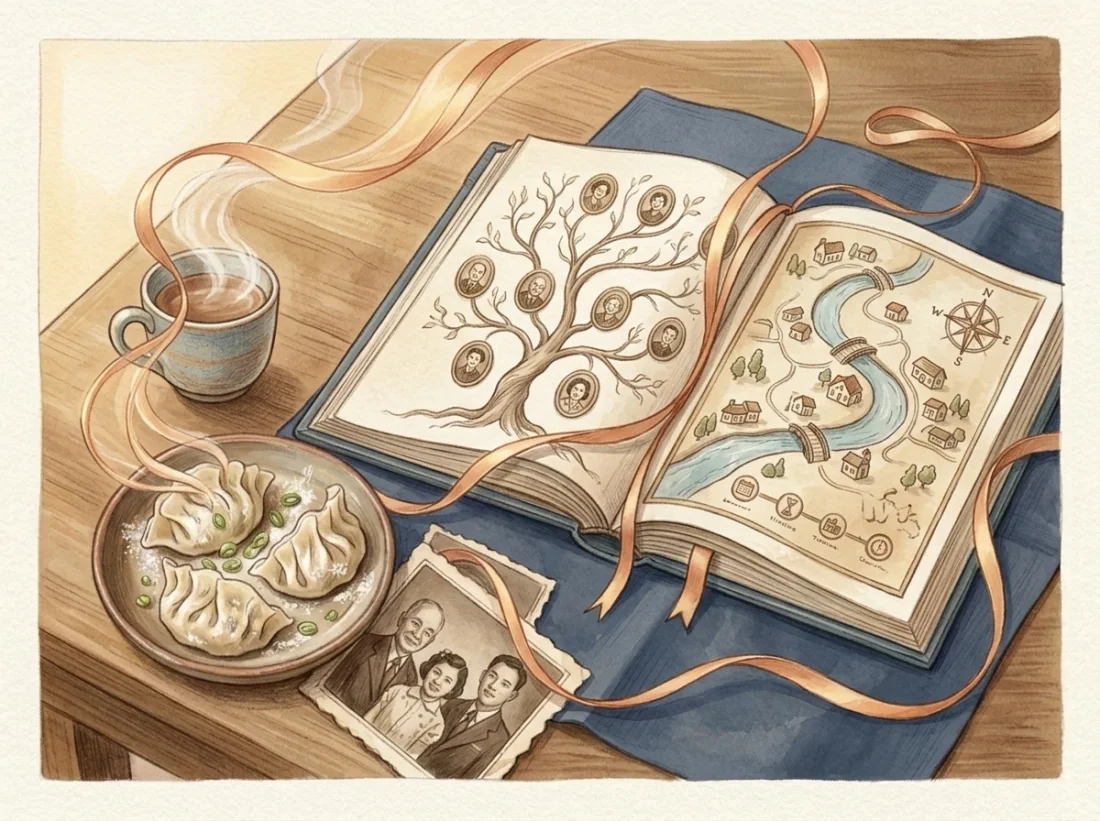
Over the course of weeks and months, these short 10-to-15 minute conversations weave into a comprehensive 12-chapter family biography. Complete with ancestral maps, family photos, and an integrated family tree, Heardloom prints and delivers a stunning hardcover heirloom volume that becomes the centerpiece of your family’s heritage.
15 Questions That Turn Distant Small Talk Into Lifelong Stories
When talking across distance, open questions like “Tell me about your past” can leave an elder unsure where to start. Instead, give Lana sensory, evocative questions that transport them back to the sights, sounds, and people of their youth:
- What was the view outside your bedroom window when you woke up as a seven-year-old child?
- What was the first meal or snack you remember learning how to cook alongside your own mother?
- How did your family celebrate the New Year or major harvest festivals in your hometown village?
- What was the longest journey or trip you ever took before you moved to this country?
- Who was the strictest teacher you had in school, and what rule did everyone try not to break?
- What kind of music or radio broadcasts did your parents play in the house when you were growing up?
- Can you describe the day you met Mom or Dad, and what you wore on your very first date?
- What was in the single suitcase you packed when you left your homeland, and what did you have to leave behind?
- What was the most overwhelming or surprising thing you saw during your first week in a foreign city?
- How did you find your first apartment or room here, and how much was the monthly rent?
- When you felt homesick in the early years, what food or place did you seek out to comfort yourself?
- What was a job you worked that was physically exhausting, but that you felt proud to finish every day?
- What is an old proverb or piece of advice your grandmother gave you that turned out to be completely true?
- Looking at your children and grandchildren scattered across the country today, what brings you the greatest peace?
- What is one memory of pure joy from your twenties that our family has never heard before?
(Browse hundreds more categorized prompts in our complete family oral history question bank.)
How Long-Distance Families Structure the Sunday Routine
Here is how thousands of distributed families weave Heardloom into their weekly rhythm across different time zones:
Friday Morning              Sunday 2:00 PM              Sunday 2:30 PM
──────────────              ──────────────              ──────────────
Siblings drop questions     Lana calls Dad's landline   Bilingual chapter arrives;
into family portal for unhurried chat kids listen to Grandpa's voice- Friday Family Thread: A sibling in New York drops a note into the family group chat: “Grandpa mentioned he used to fish in the river near his middle school. Let’s ask him about that this week.” One person submits the question to Lana via Heardloom.
- Sunday Call Time: At 2:00 PM local time in Vancouver or Houston, the phone rings in your parents’ living room. Your dad settles into his favorite armchair with a cup of hot tea and spends fifteen pleasant minutes reminiscing with Lana.
- Sunday Evening Connection: When the notification pings your phone, you open Heardloom to read the English translation while listening to the audio clip of your father laughing about falling into the river. When you call him on Sunday evening for your regular family check-in, you aren’t stuck asking “Did you eat yet?” You can say: “Dad, I heard the story about your middle school fishing trip today! I had no idea Uncle David fell in the water too!”
The call immediately transforms from a dutiful status check into a shared spark of family warmth.
Comparing Long-Distance Gifts for Aging Parents
| Gift Category | Shipped Flowers or Care Packages | Video Call Tablet / Display | English Email Memoir (Storyworth) | Heardloom Scheduled Oral History |
|---|---|---|---|---|
| Lasting Value | 4–7 days until withered | 1–2 years until obsolete | Stalls if elder cannot type | Permanent hardcover book & audio archive |
| Effort for Aging Parent | None | High (Wi-Fi, updates, passwords) | Exhausting (typing weekly essays) | Zero (answers ringing home phone) |
| Language Accessibility | N/A | English OS interfaces | English / Spanish typing only | Speaks native Mandarin, Cantonese, Korean, Tagalog, Vietnamese, Spanish |
| Cross-Generation Access | Only seen by recipients | Live call only; no recording | English text only | Side-by-side native script + English + audio timestamps |
| Preserves Elder’s Voice | ❌ No | ⚠️ Call ends, no archive | ❌ No audio preserved | ✅ Sentence-level audio clips of authentic voice |
| Family Collaboration | One-time gift | 1-on-1 calls | Single author | Whole family submits questions from any city |
| Pricing | $60–$100 per delivery | $150–$300 + subscriptions | $99/year per single person | $99/yr for the whole family, paid once |
Closing the Distance Between Generations
Miles, borders, and time zones cannot diminish the love you feel for your parents. But left unattended, time quietly takes the stories that explain who they were before they became your mother or father.
A decade from now, your family will not remember what sweater you mailed for Mother’s Day, or which fruit basket arrived on Father’s Day.
What your children and grandchildren will hold in their hands is a linen-bound book of their grandparents’ life journey—and what they will hear through their headphones is the unmistakable, joyful sound of their voice speaking from their living room armchair.
You don’t need to wait for your next annual flight home to start preserving your parents’ legacy.
Listen to a sample bilingual conversation on our demo page, learn how to record grandparents by phone, or start your family’s first free story on Heardloom today.