If you grew up in an immigrant household, holiday shopping, birthdays, and Mother’s or Father’s Day inevitably bring the same ritual dialogue:
“What would you like this year, Dad?”
“Don’t buy me anything. Don’t waste your money.”
(“别乱花钱,我什么都不缺。” / “No gastes tu dinero, no necesito nada.” / “돈 쓰지 마라, 다 있다.” / “Huwag ka nang gumastos.” / “Đừng tốn tiền mua quà.”)
For first- and second-generation adult children, shopping for aging immigrant parents or grandparents feels like an impossible puzzle. When you ask what they need, the answer is always nothing. When you guess anyway, your well-meaning gifts often end up preserved in unopened cellophane inside their bedroom closet.
Yet their insistence that they “don’t need anything” isn’t indifference. It is rooted in a lifetime of frugality, sacrifice, and a cultural instinct that prioritizes their children’s financial security above their own comfort.
If you look past the material items they decline, there is one gift immigrant elders cherish more than anything money can buy: knowing their sacrifices were understood, their voice will never be forgotten, and their life story will live on in their grandchildren’s hearts.
Here is why material gifts fail, why traditional memoir services break down across language barriers, and how to give your parents a meaningful bilingual oral history experience they will actually embrace.
The Graveyard of Well-Intentioned Material Gifts
Most adult children learn through trial and error that standard department store gift guides don’t apply to immigrant parents:
- The Closet Wardrobe: Expensive merino wool sweaters, designer coats, or luxury scarves sit in drawers with the price tags still attached. When asked why they aren’t wearing them, parents explain: “It’s too nice to wear around the house” or “I’m saving it for a special occasion” that never arrives.
- The Boxed Kitchen Appliance: High-end air fryers, slow cookers, and high-tech espresso machines remain in their original cardboard boxes in the garage. Decades into living abroad, your mother still prefers her seasoned carbon-steel wok, her favorite cleaver, and the rice cooker she bought twenty years ago.
- The Confusing Smart Device: Tablets, smart speakers, and digital picture frames sound wonderful in theory. In practice, English-only setup screens, forgotten Apple IDs, Wi-Fi reconnect prompts, and touchscreens lead to frustration. Before long, the device gathers dust on a side table.
- The Returned Cash Envelope: When all else fails, many adult children resort to red envelopes or cash. But more often than not, parents slip the money back into your coat pocket when leaving, or deposit it into a savings account earmarked for your children’s college tuition.
Material items don’t work because our parents don’t suffer from a lack of belongings. What they lack is an easy, respectful way to bridge the generational divide between their youth in their homeland and their children’s busy modern lives.
What Immigrant Parents Actually Long For
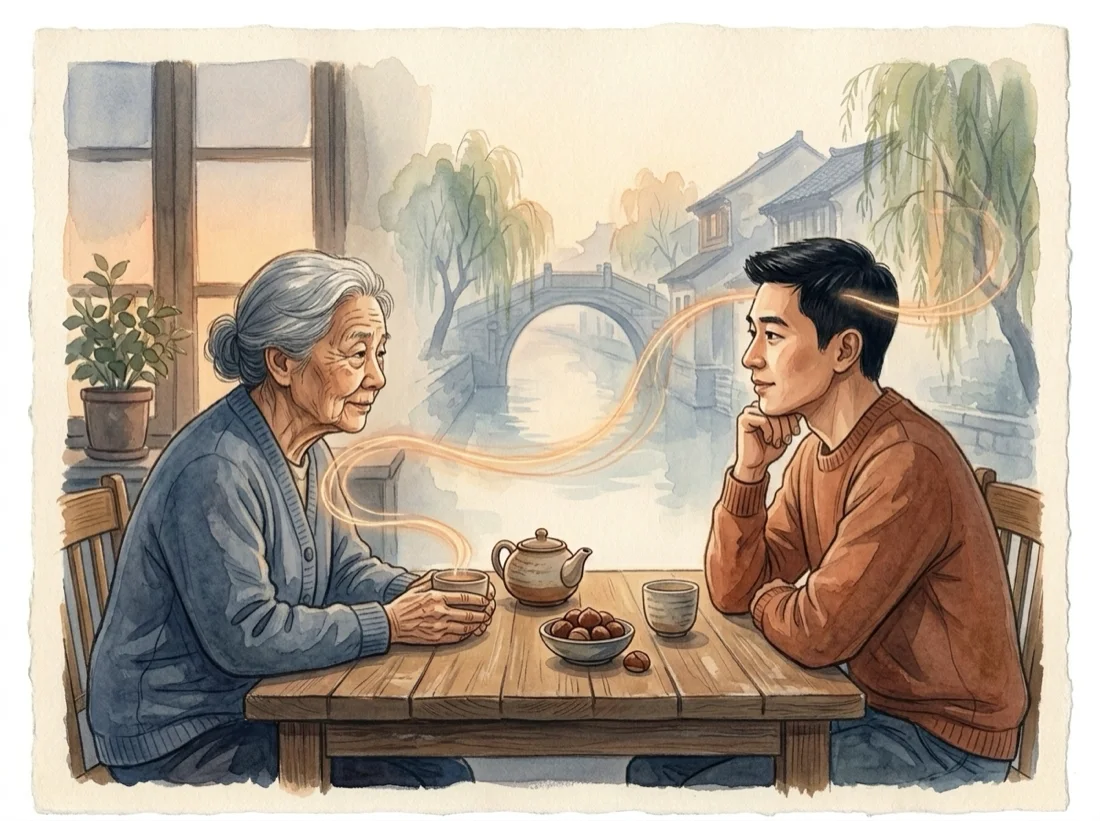
Behind the stoic exterior of many immigrant elders lies a profound, unspoken story. They left everything they knew—their childhood villages, extended families, mother tongues, and familiar customs—to build a foundation in a foreign country where they had to start from scratch.
As they enter their 70s, 80s, and 90s, three quiet desires come to the surface:
- Sacrifice Recognized: They rarely talk about the hardest days—the double shifts, the loneliness, the humiliation of navigating bureaucracy in broken English—because they never wanted to burden you. Knowing that their children truly recognize and respect what it took to get here brings deep emotional peace.
- Connection Across the Heritage Language Gap: Many adult children speak conversational “kitchen language” at home, but lack the specialized vocabulary to ask deep philosophical questions about history, politics, or ancestral roots. Parents yearn to speak freely in their native cadence without feeling pressured to simplify their thoughts.
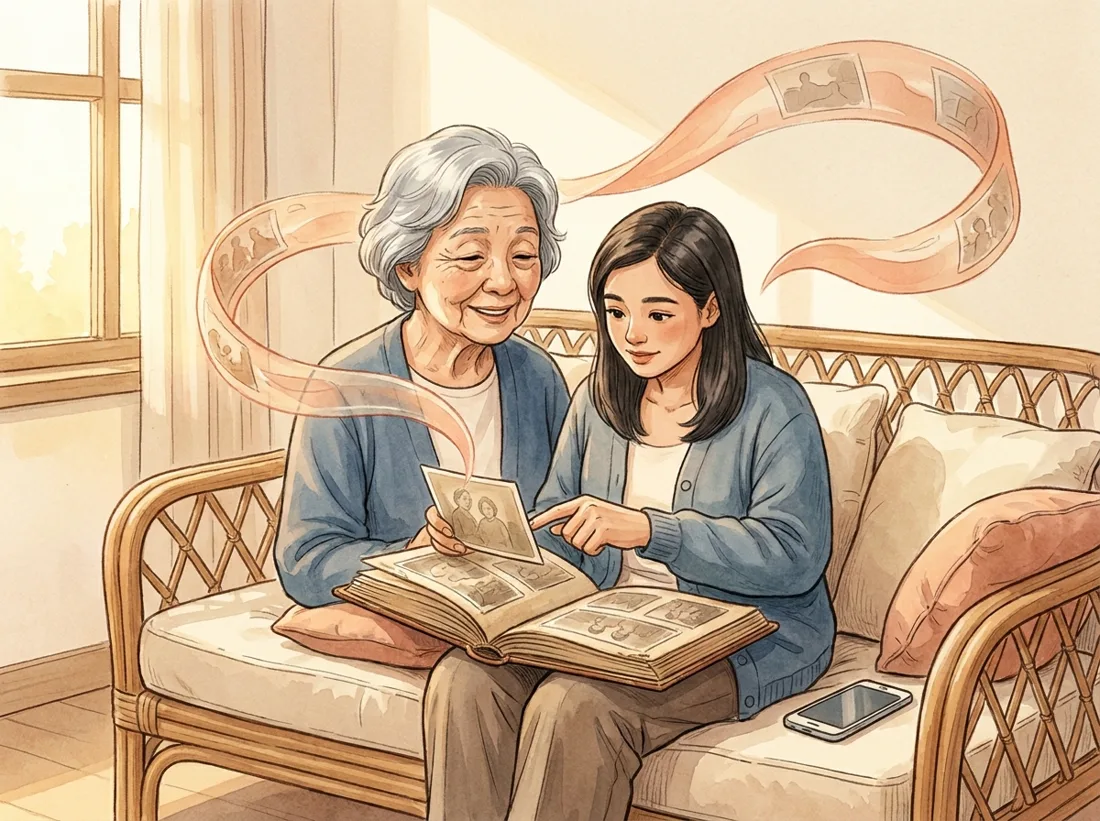
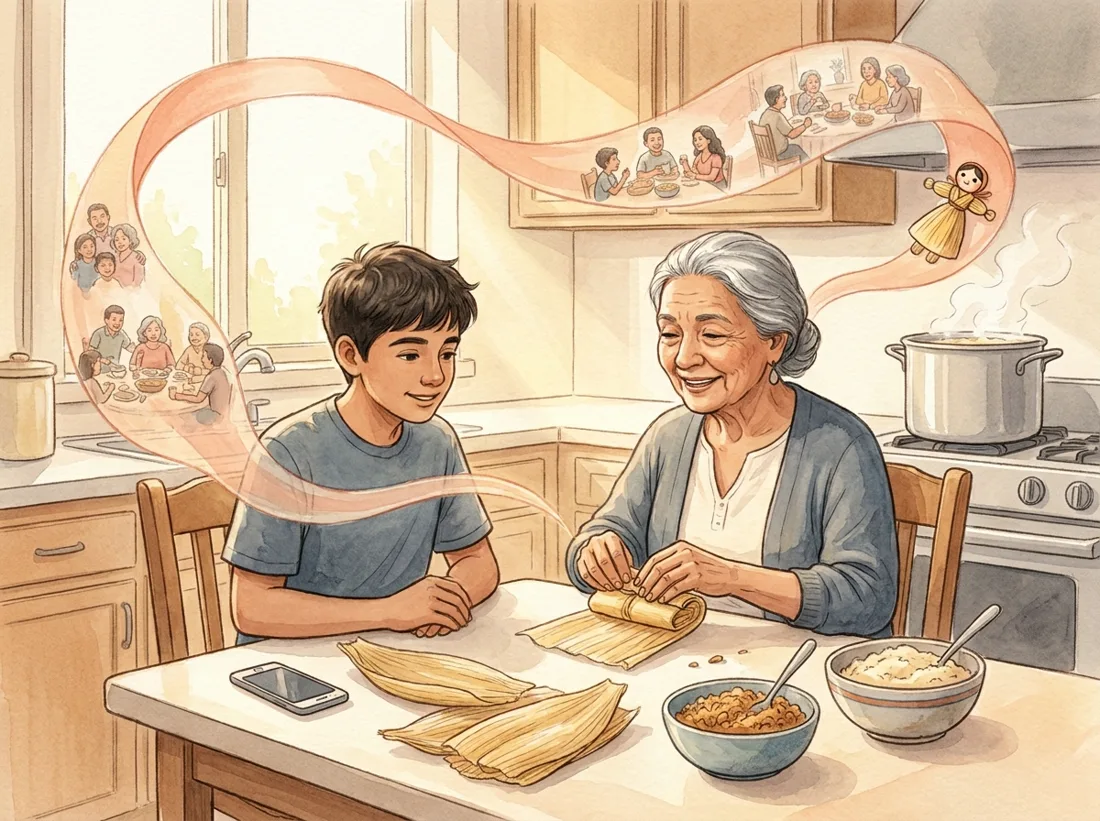
- Leaving Roots for the Next Generation: Nothing brings an elder more pride than knowing their grandchildren understand where they came from. When a grandchild who only speaks English can listen to Grandma’s voice and read her memories in English, family heritage stops being an abstract lecture and becomes a living story.
Why Traditional Memoir Gifts Often Go Unfinished
In recent years, guided life-story books have become popular holiday gifts. But when gifted to multilingual families, they almost always stall out within a month.
1. Storyworth: Weekly English Typing Homework
As we broke down in our Heardloom vs. Storyworth comparison, email-prompt services depend on typing weekly essays at a computer. For an immigrant parent who speaks English as a second language—or who finds mobile pinyin, stroke, hangul, or Vietnamese text input frustrating for aging hands—receiving 52 weekly email prompts feels like an unending homework assignment. The unreplied emails pile up, creating guilt rather than joy.
2. Remento: Staring Into a Silent Camera Lens
Video-prompt apps ask elders to tap a link and speak alone into their phone’s selfie camera. But as detailed in our Heardloom vs. Remento deep dive, modest elders often freeze up when asked to deliver a 15-minute monologue into a silent screen. Without a curious human nodding, smiling, and asking follow-ups, their answers quickly taper off after 30 seconds.
3. DIY Voice Memos: Unorganized and Forgotten
Recording parents on a smartphone Voice Memos app seems simple, but raw 2-hour audio files quickly get buried in phone backups. Without timestamps, English translations, or structured chapters, younger generations rarely find the time to listen through hours of unindexed recordings.
How Heardloom Turns Memories Into a Stress-Free Keepsake
Heardloom was created by second-generation children who experienced these exact frustrations. We built the platform specifically for multi-generational, multilingual families so elders never have to touch a keyboard, learn complicated software, or struggle through an English interface.
1. Lana: A Respectful Two-Way Interviewer in Their Heritage Language
Instead of answering written prompts, your parent enjoys a warm, unhurried conversation with Lana, our patient AI interviewer fluent in Mandarin, Cantonese, Korean, Tagalog, Vietnamese, Spanish, and English. Lana doesn’t just read questions off a list; she listens actively, laughs at family jokes, and asks thoughtful, spontaneous follow-up questions in their native language and dialect.
2. Zero App Friction: Regular Landline and Mobile Phone Calls
If your parent or grandparent doesn’t want to use a mobile app, Heardloom can ring their existing home landline or cell phone at a scheduled time every week. They simply pick up the ringing receiver, chat with Lana from their favorite armchair for 10 to 15 minutes, and hang up. There are no passwords to remember, no screens to tap, and no Wi-Fi issues to troubleshoot.
3. Backstage Family Tree and Cross-Session Memory
Lana is briefed on your family tree before every conversation. She understands complex kinship titles (“Third Maternal Aunt,” “Eldest Uncle”) and remembers stories from previous weeks. If your father mentions his childhood elementary school in Taipei during his first call, Lana remembers that school two weeks later when asking about his teenage friends.
4. Side-by-Side Bilingual Chapters Synced to Spoken Audio
Within minutes of concluding a conversation, Heardloom produces a bilingual chapter presenting their original native words alongside an accurate, verified English translation. Every sentence is linked to the exact second in the recording: grandchildren can read along in English and tap any sentence to hear the authentic warmth, inflection, and laughter in their grandparent’s voice.
5. A Hardcover Heirloom Book for the Family
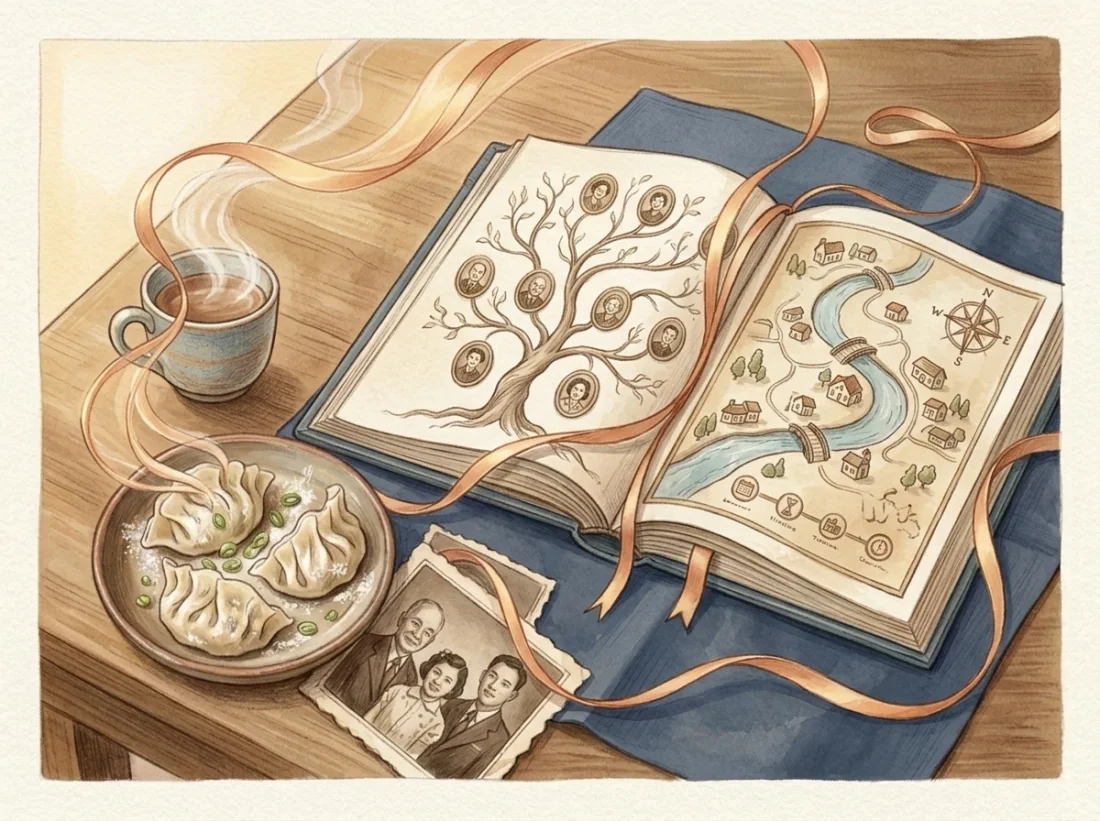
Over the course of a year, short 10-minute weekly chats are woven into a beautiful 12-chapter hardcover keepsake book, complete with an auto-generated family tree, hometown migration map, and family photographs. One Family Plan ($99 for a year, paid once) covers every parent and grandparent in your family, and everyone’s first story is completely free.
Comparing Meaningful Gift Options for Immigrant Parents
| Feature | Department Store Gift | Storyworth / Prompts | Heardloom Bilingual Oral History |
|---|---|---|---|
| What They Receive | Material item (clothing, appliance, gadget) | Weekly email essays to type in English | Warm 2-way voice conversation in their mother tongue |
| Elder Effort Required | None (often stays in closet) | High: typing 52 weekly essays at a keyboard | Zero: picking up a weekly phone call |
| Language Support | N/A | English and Spanish only (no Asian languages) | Mandarin, Cantonese, Korean, Tagalog, Vietnamese, Spanish, English |
| Bilingual Preservation | ❌ None | ❌ Single language only | ✅ Side-by-side native script + faithful English translation |
| Voice & Audio Preserved | ❌ None | ❌ None (or raw voicemail clips) | ✅ Sentence-level audio timestamp citations |
| Grandchildren Engagement | Low | Low if grandkids don’t read elder’s language | High: audio-linked English text allows young kids to listen and read |
| Lasting Value | Depreciates over time | Bound book of typed essays | Permanent multi-generational audio archive + hardcover keepsake book |
(Exploring other oral history formats? See our guide to Heardloom vs. Storii and MemoryWell or how to record family stories around the holiday dinner table.)
How to Introduce the Gift Without Triggering “Don’t Spend Money”
If you hand your parents a gift box and say “I bought you an expensive service to write your biography,” their immediate instinct will be modesty: “My life is ordinary, nobody wants to read about me.”
Instead, use one of these three conversational approaches that resonate with immigrant elders:
Approach A: The Grandchildren Legacy Angle (Most Effective)
“Mom, Dad, this isn’t for you—it’s for the kids. In 30 years, when they have children of their own, I don’t want them to only know you from old photographs. I want them to hear your actual voice and understand what your life was like back in your hometown. All you have to do is pick up the phone once a week for 10 minutes and chat in your own language.”
Approach B: The Unwritten Family Recipe Angle
“Grandma, nobody in the family knows how to make your steamed fish or dumpling filling the way you do because you never wrote down measurements. Heardloom lets you explain the recipe out loud in Cantonese/Mandarin/Spanish while you cook, and it writes down the recipe card and your memories for the entire family.” (See our guide on capturing family recipes and kitchen stories).
Approach C: The Sunday Dinner Demonstration
When the family gathers for dinner, place your phone on the center of the table and try one 10-minute demo session together. When your parents see how effortlessly Lana speaks their language, listens to their reminiscing, and immediately produces a bilingual transcript their grandkids can read on an iPad, skepticism turns into delight.
You can also print out a personalized bilingual gift note in their native language from our printable gift note tool to hand them in a greeting card.
7 Questions That Spark Vivid Memories for Modest Parents
When you start your parents’ recording journey, avoid broad questions like “Can you summarize your career?” Instead, ask specific, sensory questions that transport them back to childhood scenes (explore our complete bilingual oral history question bank):
- What was the very first dish or snack you loved buying from street vendors in your hometown?
- When you were ten years old, what was the morning sound outside your bedroom window?
- What was the neighborhood street or road you walked down every single day on your way to school?
- What was the first item you bought with your very first paycheck, and who did you celebrate with?
- Can you describe the small suitcase or bag you packed when you left home for the first time?
- What was the first thing in an American grocery store that looked completely baffling to you?
- Is there a proverb or phrase your own grandparents always said whenever life was difficult?
The Greatest Gift You Can Give Is Listening
Years from now, nobody in your family will remember what brand of sweater you gifted for Christmas, or what model toaster was under the tree.
What will be treasured across generations is the sound of your mother’s laughter as she describes meeting your father at a night market, the cadence of your grandfather’s voice recalling his village across the ocean, and the pride in knowing their journey was preserved with dignity.
Give your parents the one thing they will never turn away: a patient listener who honors their story.
Listen to a sample bilingual conversation on our demo page, print a bilingual gift note, or start your family’s first free story on Heardloom today.