How families bridge the language gap, turning conversations in a parent’s native language into side-by-side bilingual chapters and a 12-part family book.
Hear their real voice. Read in both their language and yours.
In many immigrant families, elders speak most naturally in Mandarin, Cantonese, Korean, Tagalog, Spanish, and Vietnamese, while children and grandchildren read most comfortably in English. Press play below to see how one spoken conversation becomes a side-by-side bilingual chapter where every paragraph is linked to the exact second of the recording.
Grandma Chen · Told in Mandarin
The first winter
0:00
OriginalEnglish
第一个冬天特别冷。我们住在皇后区的一个地下室,暖气时有时无,晚上睡觉要穿着毛衣。
The first winter was bitterly cold. We lived in a basement in Queens. The heat came and went, and we slept in our sweaters.
你爷爷在中餐馆洗碗,我在制衣厂做工,一天做十个钟头。下班坐地铁回家,常常在车上就睡着了。
Your grandfather washed dishes in a Chinese restaurant, and I worked in a garment factory, ten hours a day. Riding the subway home, I often fell asleep on the train.
那年过年,我们买不起什么,就包了一锅饺子,请了楼上的邻居一起吃。那是我在美国过的第一个年。
That New Year we couldn’t afford much, so we made a pot of dumplings and invited the neighbors from upstairs. It was my first New Year in America.
Tap any line to hear that moment.
Why everyday family fluency isn’t enough for life stories
Many first- and second-generation adult children grow up speaking enough of their parents’ language for everyday life around the house — asking what’s for dinner, greeting relatives on holidays, or chatting on a Sunday phone call.
But when parents or grandparents begin talking about their youth, the vocabulary shifts completely:
Historical eras & turning points: Stories from the 1940s through the 1990s carry historical terms, school systems, rations, and policies that never come up in kitchen-table small talk.
Old hometowns & village names: Elders name county seats, rivers, markets, and childhood streets that are nearly impossible to spell or map by ear alone.
Extended kinship titles: Instead of first names, stories are populated by titles like “Second Paternal Uncle” or “Third Maternal Aunt” (which you can look up in our multilingual kinship calculator).
Idioms & family sayings: The proverbs and understatement elders use to describe hard years lose their heart when summarized in a quick English paraphrase.
Why a curious listener who remembers past chats changes everything
When you hand an elder a list of written questions in English — or ask them to speak into a silent voice memo app — they often give short, polite two-sentence answers: “Life was hard back then, we worked a lot, and then we came here.” (Read more in our comparison of written email prompts vs. live bilingual conversations.)
Stories come alive when the listener can follow up naturally in the elder’s own language:
Follow-ups in the moment: When your mother mentions working at a garment factory or a family restaurant, Heardloom’s interviewer (Lana) asks, “Who worked alongside you there, and how did you get home at night?”
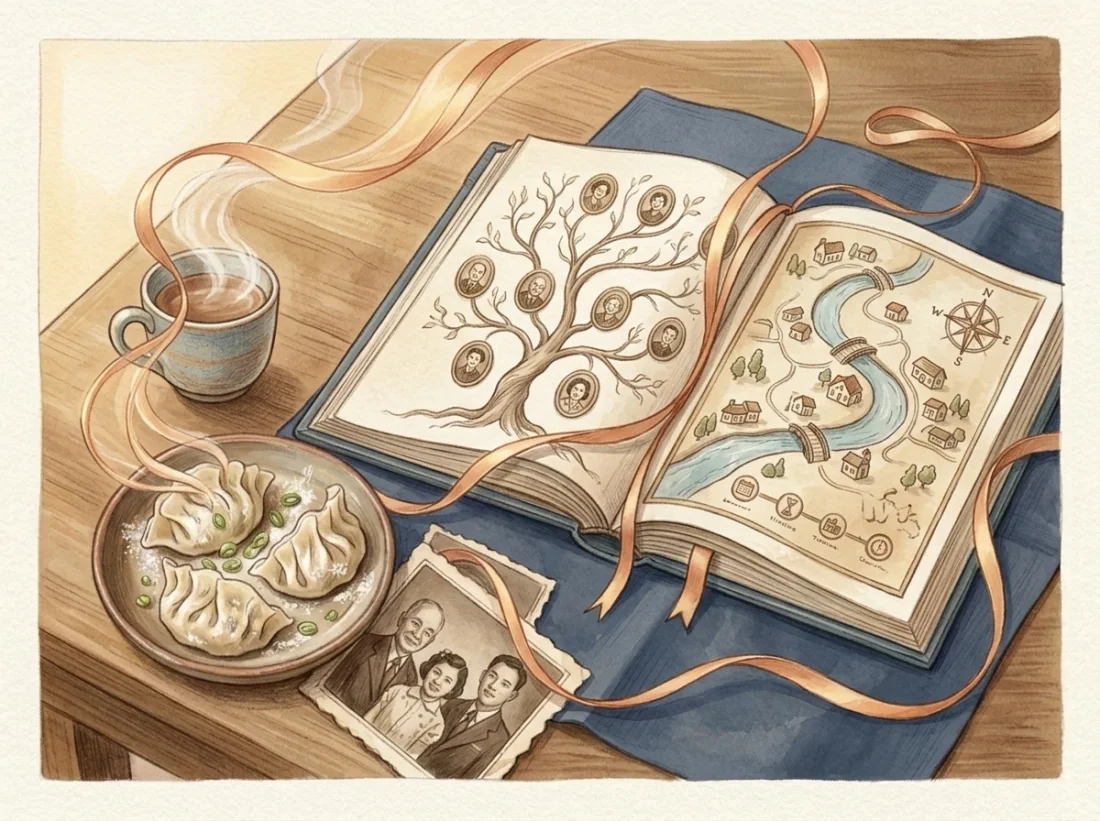
Memory across conversations: Because Heardloom’s backstage biographer updates your family tree, timeline, and map after every session, Lana remembers what your parent shared last week. Next Sunday — whether in the app or over a weekly telephone call — she can ask, “Last time you mentioned moving to that first apartment with your older sister — what was your first holiday there like?”
No detail invented, ever: Unlike generic AI rewriters that embellish or smooth away a speaker’s personality, Heardloom verifies every single sentence against timestamped audio citations. If it wasn’t said in the recording, it never enters the story.
5 questions that unlock rich stories in their native language
What was the name of the town or neighborhood where you grew up, and what was it best known for?
Is there a family saying or proverb your parents repeated that doesn’t translate easily into English?
What was the hardest goodbye when you left home, and what did you pack in your suitcase?
Who helped you translate or find your footing during your very first month in a new country?
What do you want your grandchildren and great-grandchildren to remember about where our family comes from?
From Spoken Conversations to a 12-Part Family Book
How Heardloom organizes stories by life stage — not just the week they were recorded
Real elders jump between decades in a single conversation. Heardloom automatically weaves each story into 12 chronological life stages (plus custom family parts), with chapter titles in both English and your storyteller’s language.
Part 01家族渊源
Family roots
Ancestral villages, grandparents’ names, and the stories told before your storyteller was born.
Starter question: “What do you know about your grandparents and the town our family came from?”
Part 02童年
Childhood
The childhood home, siblings, courtyard games, everyday meals, and earliest memories.
Starter question: “When you stepped out the front door of your childhood home in the morning, what could you see?”
Part 03求学与青年
School & youth
Favorite teachers, walking to school, childhood friendships, and teenage dreams.
Starter question: “Who was your best friend in school, and what kind of trouble did the two of you get into?”
Part 04出国前的工作
Work before leaving
First jobs, apprenticeships, and how they earned a living in the old country.
Starter question: “What was your very first job, and what did you do with your first month’s pay?”
Part 05爱情与婚姻
Love & marriage
How they met their partner, courtship letters, and what their wedding day was like.
Starter question: “How did the two of you meet, and when did you know they were the one?”
Part 06决定出国
Deciding to leave
The kitchen-table decision to leave home, who helped with paperwork, and saying goodbye.
Starter question: “When did you first decide to leave, and what was the hardest goodbye?”
Part 07远行
The journey
The flight or boat ride, what was inside their suitcase, and the moment of landing.
Starter question: “What did you pack in your suitcase, and what were you thinking on the plane or boat?”
Part 08初到异乡
Arrival
The first apartment, the first winter, learning new customs, and the first job in a new land.
Starter question: “What was your very first week in the new country like, and who helped you settle in?”
Part 09安身立命
Building a life
Buying a first home, starting a business or career, and putting down roots.
Starter question: “When did this new place finally start to feel like home?”
Part 10养育儿女
Raising children
The day each child was born, choosing names, and what they hoped for their kids.
Starter question: “What do you remember most about the day your first child was born?”
Part 11晚年
Later years
Becoming grandparents, travel, retirement passions, and family gatherings.
Starter question: “What has been your favorite part of watching your children and grandchildren grow up?”
Part 12感悟与嘱托
Reflections & advice
Life lessons, family mottos, and letters of wisdom for future generations.
Starter question: “What do you want your great-grandchildren to know about our family’s character?”