Heardloom

GuidesPhotos & Heirlooms

Record the stories behind old family photos

How to turn old photo albums into voiced bilingual stories — with interactive photo prompts in every language Heardloom supports.

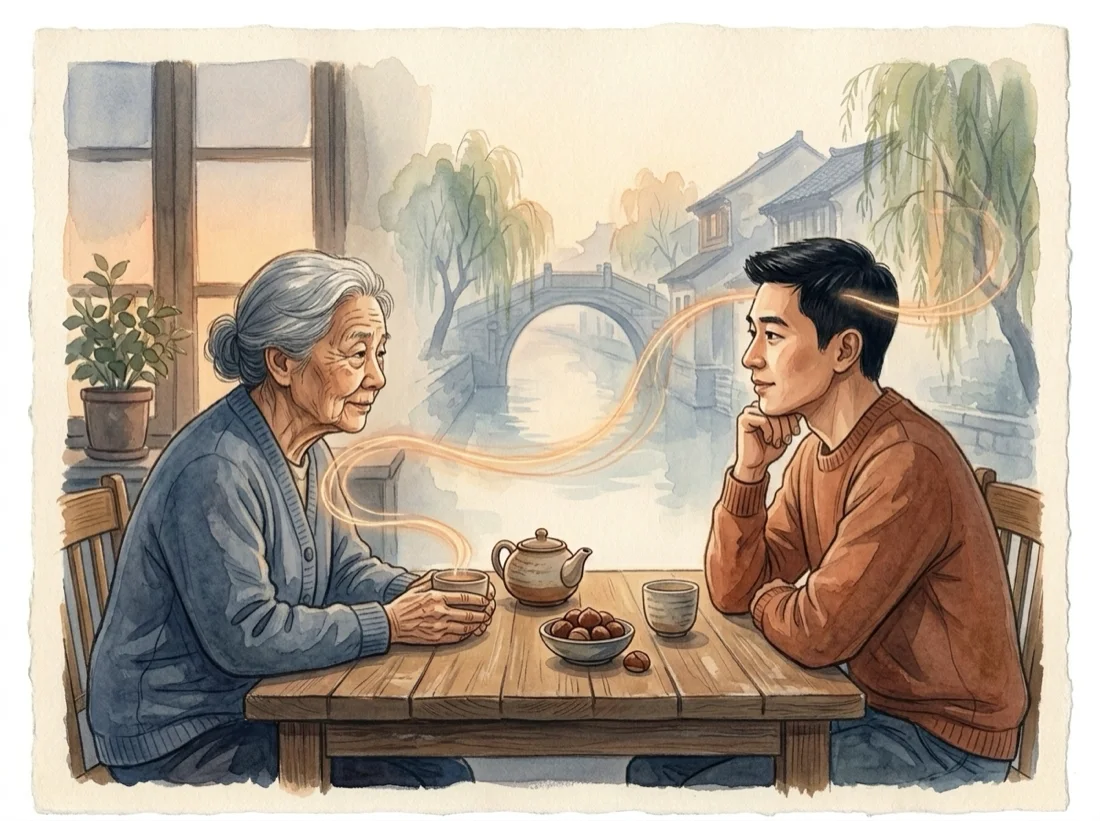
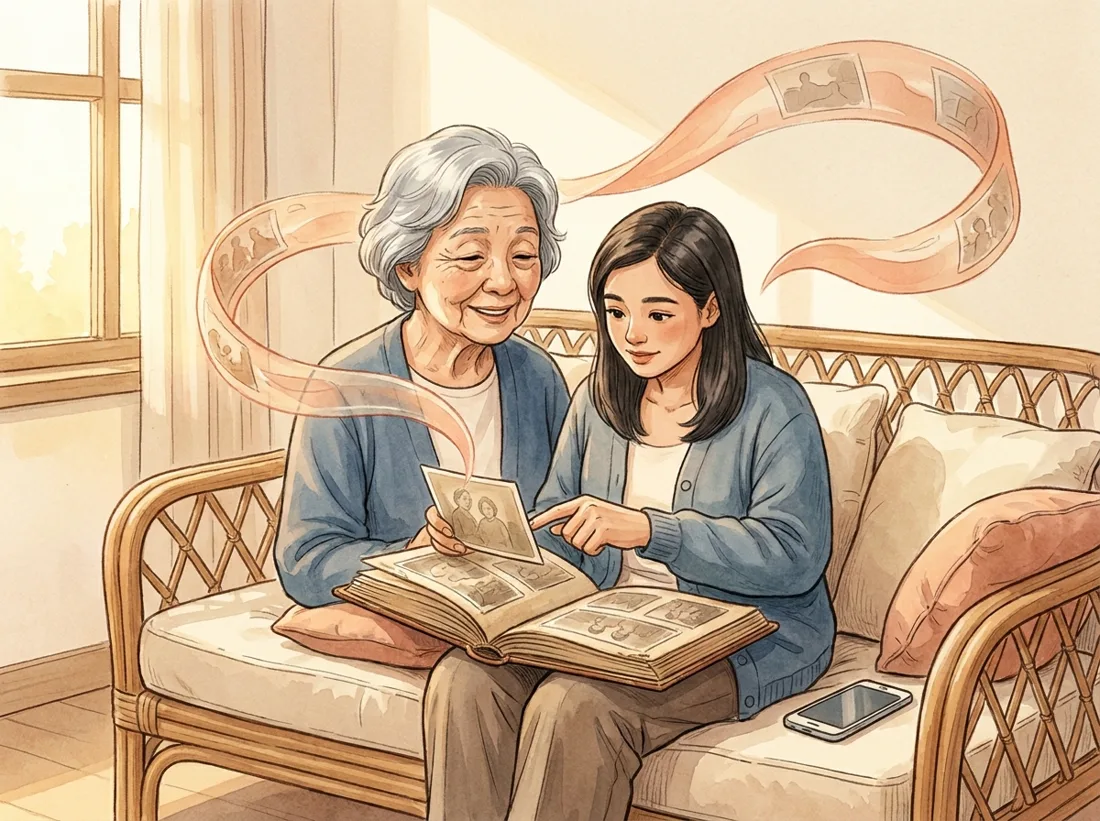
Watercolor illustration of a grandmother on a rattan sofa showing an old family photo album to her granddaughter

Interactive Photo Album Prompt Bank

What to ask when you open an old photo album together

Every family has a shoebox or album of black-and-white and faded color prints that only one parent or grandparent can still explain. Pick a language from Mandarin, Cantonese, Korean, Tagalog, Spanish, and Vietnamese and filter by photo type to ask the right question while the album is open on the table.

1. Storyteller’s language
2. Type of photo
Group & Holiday PhotosGroup portrait with extended relatives

Who is standing next to you in this photo, and how are they related to us?

这张照片里站在您旁边的是谁?按辈分我们该怎么称呼?

Zhè zhāng zhàopiàn lǐ zhàn zài nín pángbiān de shì shéi? Àn bèifèn wǒmen gāi zěnme chēnghu?

Identifies unnamed aunts, uncles, and cousins while your elder can still place every face and kinship title.
Childhood & HometownOld house, courtyard, or street

Where was this photo taken, and what was right outside the frame?

这张照片是在哪里拍的?镜头外面周围是什么样的?

Zhè zhāng zhàopiàn shì zài nǎlǐ pāi de? Jìngtóu wàimiàn zhōuwéi shì shénme yàng de?

Asking what was outside the camera frame turns a static black-and-white snapshot into a walk through their old neighborhood.

Wedding & CourtshipWedding portrait or banquet

What do you remember about the day this wedding photo was taken? Did you borrow or make what you wore?

拍这张结婚照那天您还记得什么?身上穿的衣服是借的、买的还是自己做的?

Pāi zhè zhāng jiéhūnzhào nà tiān nín hái jìde shénme? Shēnshang chuān de yīfu shì jiè de, mǎi de háishì zìjǐ zuò de?

Details about a borrowed suit, a handmade dress, or a small studio portrait bring out the era and the people who helped them celebrate.

Arrival & First HomeFirst apartment, car, or workplace

Was this our first place after arriving? What was life like during the year this photo was taken?

这是刚来时住的第一个地方吗?拍这张照片那一年,日子是怎么过的?

Zhè shì gāng lái shí zhù de dì-yī gè dìfang ma? Pāi zhè zhāng zhàopiàn nà yī nián, rìzi shì zěnme guò de?

Photos on the steps of a first apartment or leaning against a first used car anchor the hardest, proudest early years in a new country.

Keepsakes & HeirloomsKeepsake, jewelry, or family object

Where did this object come from, and do we still have it in the family today?

照片里的这件东西是从哪儿来的?现在还留在咱们家里吗?

Zhàopiàn lǐ de zhè jiàn dōngxi shì cóng nǎr lái de? Xiànzài hái liú zài zánmen jiālǐ ma?

Connects a watch, jade bracelet, teapot, or handwritten letter seen in an old photo to the heirloom stories on your family heritage page.

Childhood & HometownStudio portrait or rare childhood photo

Getting a photo taken back then was a big occasion — what were you celebrating that day, and who took it?

那时候拍照是件大事——那天是因为什么特别的事去拍照的?是谁拍的?

Nà shíhou pāizhào shì jiàn dàshì — nà tiān shì yīnwèi shénme tèbié de shì qù pāizhào de?

When film was scarce, families only visited a photo studio for graduations, farewells before emigrating, or milestone birthdays.

Why scanning old photos isn’t enough without the voice behind them

Many families spend a weekend scanning old prints into a cloud folder, only to realize a few years later that nobody remembers who the people in the second row are, which village the stone bridge was in, or why everyone was dressed up that afternoon.

A photograph without its story is just an image. When an elder talks through an album out loud in their own language, three things happen at once:

  • Unnamed faces become real relatives on the family tree: A stranger in a 1960s courtyard photo becomes “Second Maternal Uncle, who lent us his bicycle and saw us off at the train station.” (Need help decoding kinship titles? Try our multilingual kinship calculator.)
  • Background details unlock whole chapters of history: Asking about a uniform, a shop sign, a bicycle, or a cramped basement kitchen brings out stories of first jobs and early winters that never come up in abstract interviews.
  • Future generations hear their real emotion: Hearing a grandmother laugh at a childhood haircut or pause over a late sibling’s portrait preserves the warmth that a written caption flattens out.

In Heardloom, photos aren’t just decorations pasted into a book at the end of the year — they are part of how Lana draws stories out:

  • Show a photo during any conversation: Hold a printed photograph up to the camera or pick an album from your Shared Family Photo Library. Lana looks at the photo alongside your storyteller and asks gentle questions about that day in their native language.
  • Automatic on-device face grouping: As cousins, parents, and grandchildren upload old snapshots, Heardloom groups faces across decades so you can tap any relative on the family tree and see every photo they appear in.
  • Stories stay attached to the exact photo: When your grandfather tells a two-minute story about a 1974 harbor photo, Heardloom attaches the bilingual story and his voice recording directly to that photograph — and places the photo beside the matching paragraph in his life-stage book.

5 questions to ask over any family photo album

  • Who is in this photo, and how are we related to each person?
  • Where was this picture taken, and what was just outside the camera frame?
  • What happened in the ten minutes right before or after this photo was taken?
  • Who owned the camera that took this picture, and why were you all gathered together that day?
  • If you could step back into this photo for one afternoon, what would you want to see or taste again?

Want more starter prompts? Bring an album to your next family holiday gathering, explore our bilingual question bank, or see how Heardloom turns spoken conversations into a 12-part bilingual book.

Your family’s quiet biographer

One rambling conversation in. Five connected pieces out.

Nobody tells their life from Chapter 1 to Chapter 10. Talk in any order — minutes after a conversation ends, Heardloom pieces every detail into its place, creating a cohesive, chronological family story.

What Grandma Chen said · 0:00⁠–⁠0:26
“The first winter was bitterly cold. We lived in a basement in Queens. Your grandfather washed dishes in a restaurant, and I worked in a garment factory… That New Year we made a pot of pork and cabbage dumplings and invited the neighbors from upstairs.”

Woven automatically by Heardloom

  • Multilingual story · 0:00⁠–⁠0:26

    The First Winter

    Written in her original words and English, checked sentence by sentence against the audio.

  • Family tree & biographies

    Grandpa Chen & Grandma Chen

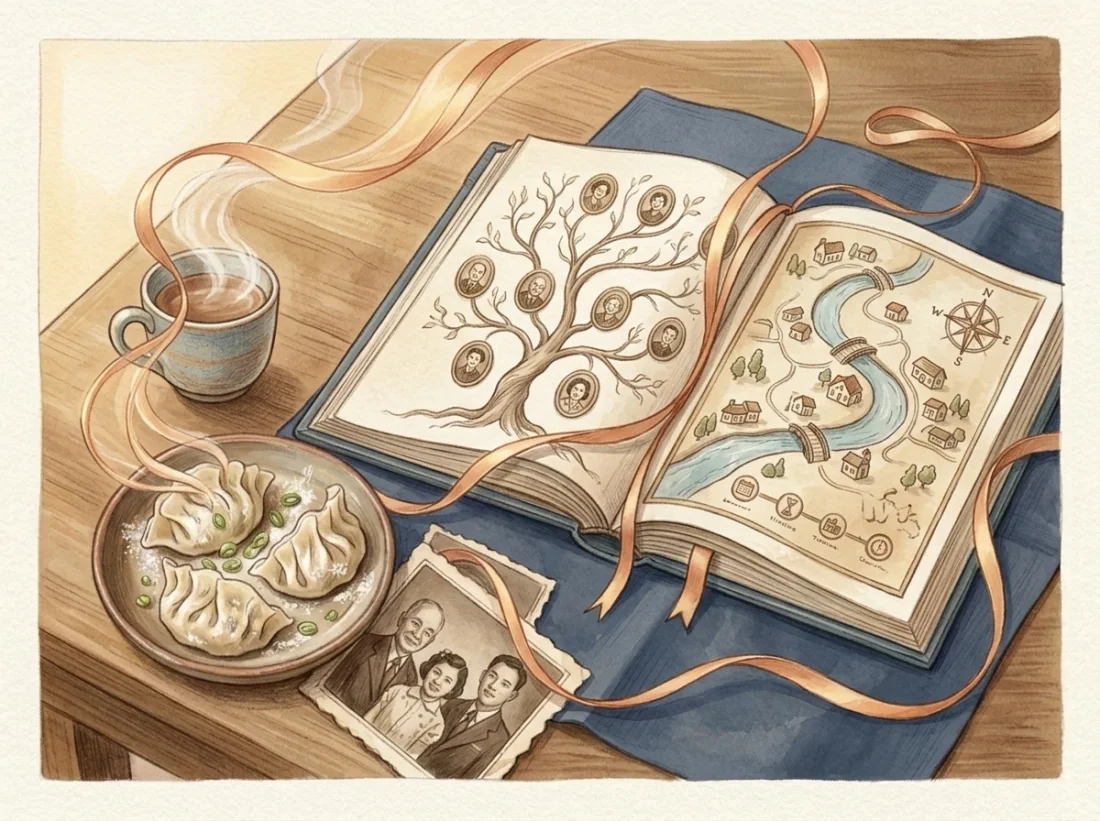
    Identifies “your grandfather” as Grandpa Chen and adds restaurant & garment factory work to their life pages.

  • Timeline & hometown map

    Queens, New York · First Winter

    Pinned on the family map and placed in order on the timeline alongside earlier decades.

  • Family heritage page

    New Year Pork & Napa Dumplings

    Picked out of the middle of the conversation and added to your family’s dishes & traditions.

  • Queued for Lana next time

    Unfinished thread noticed

    “What was that garment factory like, and who were the upstairs neighbors you invited?”

Every family has stories worth keeping.

Start with one conversation. The first recording is free.

Get the app

Scan with your phone camera to download

Scan with your phone camera to download

Available on iOS and Android

Use in browser